Learning objectives
- Recognise when an expression is used figuratively rather than literally.
- Distinguish an idiom from a proverb in common usage.
- Create a contextual sentence after reading the reference entry.
Hindi Language and Literature · Interactive idiom-and-proverb reference
Explore Hindi मुहावरे and लोकोक्तियाँ by examining their stated meanings and examples in context.
Portrait activity · keep the device upright for the intended layout
Learning focus: Explore Hindi मुहावरे and लोकोक्तियाँ by examining their stated meanings and examples in context.
 Alphabet Progression Sequencer
 develops logical thinking through ordered Hindi alphabet patterns. Students arrange rand…
View Details
Play
Free Activity
 Hindi Letter Discovery
 is a recognition activity that helps students find missing or target Hindi letters. It supports …
View Details
Play
Free Activity
 Hindi Alphabet Sequencer
 is a Hindi letter-order activity that helps students arrange letters before and after a given …
View Details
Play
Free Activity
 Hindi Alphabet: Vowels and Consonants
 is an interactive language activity for learning Hindi letters in a clear visual …
View Details
Play
Free Activity
 Hindi Numbers 1 to 100
 helps learners practice number names and number recognition in Hindi. It supports early numeracy…
View Details
Play
Free Activity
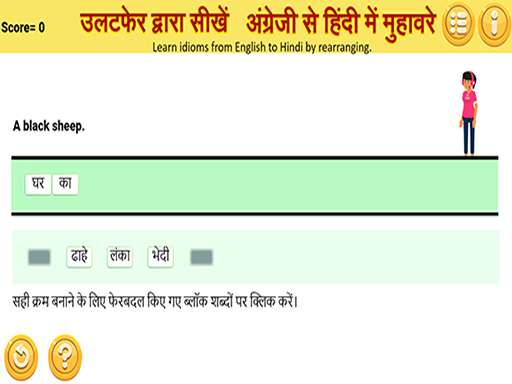 Shuffled Idioms
 is a Hindi language activity where learners arrange shuffled words to complete idioms and proverbs. It …
View Details
Play












💭 Comments