Learning objectives
- Recognise the ordered sequence 1 through 16
- Check adjacent candidate moves before committing
- Explain why a higher visible number may not be the correct next step
Mathematics — Number Sequencing · Number-path maze from 1 to 16
Practise consecutive-number order while deciding which adjacent path continues a maze.
Portrait activity · keep the device upright for the intended layout
Learning focus: Practise consecutive-number order while deciding which adjacent path continues a maze.
 Word Sort: Professions and Jobs
 is an English vocabulary activity that helps children recognize occupation names. Learn…
View Details
Play
Free Activity
 CVC Words: Circle That Word
 is a phonics and spelling quiz for learners practising short vowel sounds and simple word r…
View Details
Play
Free Activity
 Alphabet Symmetry
 helps learners explore whether letters have a line of symmetry. It connects early geometry with alpha…
View Details
Play
Free Activity
 Monkey and Hunter Physics Simulation
Monkey and Hunter is a classic physics simulation for understanding projectile motion and gravity. Students observe how…
View Details
Play
Free Activity
 Ramanujan Magic Square
 is a recreational mathematics activity inspired by number patterns and magic squares. Students c…
View Details
Play
Free Activity
 Punjabi Alphabet: Vowels and Consonants
 is a beginner-friendly activity for recognizing Punjabi letters and letter grou…
View Details
Play
Free Activity
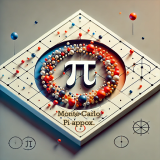
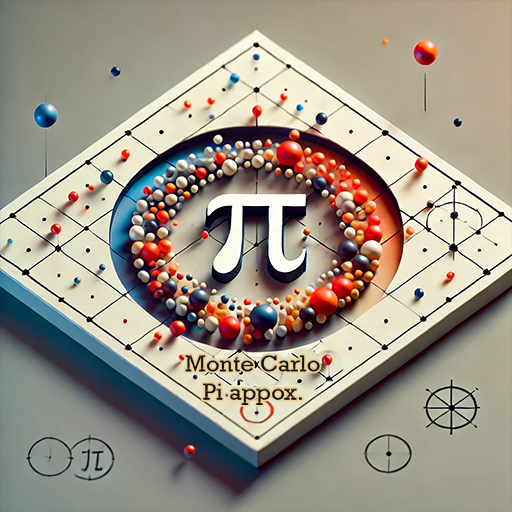 Monte Carlo Pi Approximation Lab
 demonstrates how random sampling can estimate the value of pi. Students observe points…
View Details
Play
Free Activity
 Words Drag and Drop With Sounds
 is an early literacy activity that helps children connect letters, sounds, and familiar…
View Details
Play
Free Activity
 Virtual Soroban: Japanese Abacus
Virtual Soroban is an interactive Japanese abacus activity for exploring bead values and number representation. Student…
View Details
Play
Free Activity
 Logic Game: Alphabets
 is an English letter-order activity for young learners. Students fill in missing letters in the c…
View Details
Play
Free Activity
 Add-UP-Ladder
 is a mathematics practice game where learners climb through number paths to make the required total. It s…
View Details
Play
Free Activity
 Animals Venn CHO
 is a Venn diagram sorting activity for herbivores, carnivores, and omnivores. Students classify animal…
View Details
Play







💭 Comments