Learning objectives
- Read a displayed number from bead arrangements
- Predict the effect of changing one place-value column
- Distinguish digit position from the number of beads moved
Mathematics — Place Value · Horizontal abacus bead manipulation
Investigate how moving beads along a horizontal abacus represents numbers and changes the value displayed.
Landscape activity · use fullscreen on a phone for larger controls
Learning focus: Investigate how moving beads along a horizontal abacus represents numbers and changes the value displayed.
 Left and Right Position
 is a spatial reasoning activity that helps children practise identifying directions and relativ…
View Details
Play
Free Activity
 Chromosome Crossing Over Simulation
 explains how genetic material may be exchanged between homologous chromosomes durin…
View Details
Play
Free Activity
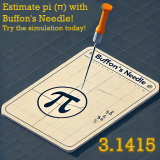
 Buffon's Needle Probability Lab
 is a geometry and probability activity based on the classic needle-dropping experiment.…
View Details
Play
Free Activity
 Adaptive Hidden Words
 is a word-discovery game for spelling and vocabulary practice. Students identify the correct spel…
View Details
Play
Free Activity
 Quadratic Equation Solver
 is an interactive mathematics tool for practising quadratic equations. It helps learners gene…
View Details
Play
★ Premium
 Revelation Card Logic Puzzle
 is a card-based pattern activity that demonstrates how arrangement, observation, and proce…
View Details
Access Info
Free Activity
 Sports Tournaments
 is a Physical Education quiz activity focused on tournament formats, competition structure, and spor…
View Details
Play
Free Activity
 Rhyme Times
 helps young learners recognize rhyming words through picture-based practice. It supports phonics, listening…
View Details
Play
Free Activity
 Opposites and Antonyms
 is an illustrated English activity that helps learners understand opposite words through example…
View Details
Play
Free Activity
 Words Drag and Drop With Sounds
 is an early literacy activity that helps children connect letters, sounds, and familiar…
View Details
Play
Free Activity
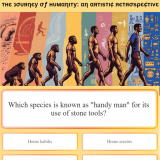
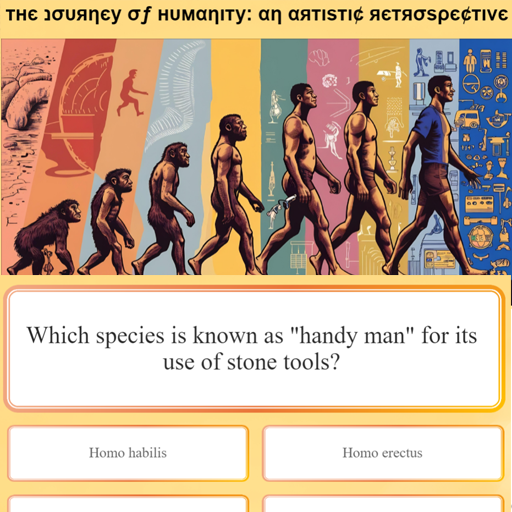 Human Evolution: Visual Learning Journey
 introduces the broad progression of human development through visual stages an…
View Details
Play
Free Activity
 Professions-N-Jobs
 helps learners identify common occupations and connect them with related pictures or roles. It suppo…
View Details
Play






💭 Comments