Learning objectives
- Count each type of atom on the reactant and product sides of a chemical equation.
- Choose whole-number coefficients that conserve every element.
- Reduce coefficients to the smallest whole-number ratio and verify the result.
Chemistry · Grades 10–12 · Interactive learning companion
Balance reaction equations by conserving the number of atoms of every element while leaving chemical formulas unchanged.
Landscape activity · use fullscreen on a phone for larger controls
Learning focus: Balance reaction equations by conserving the number of atoms of every element while leaving chemical formulas unchanged.
 Paw Track: Known by What We Leave
Paw Track is an animal footprint recognition activity. Students observe paw prints, compare them with animals, and iden…
View Details
Play
Free Activity
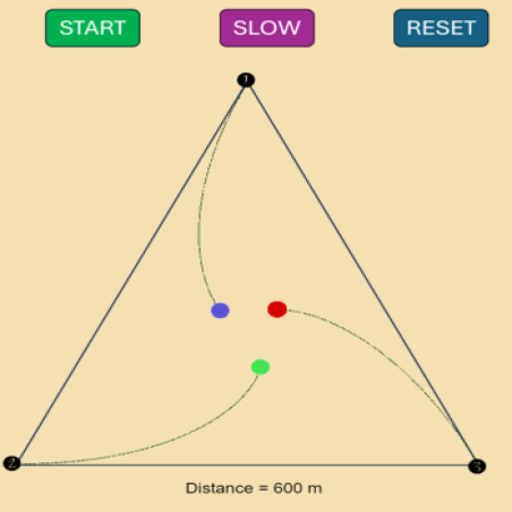 Convergence Chase Simulation
 explores a classic pursuit problem where moving points continuously chase one another. Stu…
View Details
Play
Free Activity
 Touch Letters
 is a Punjabi alphabet practice game for early learners. Students identify the displayed letter and tap th…
View Details
Play
Free Activity
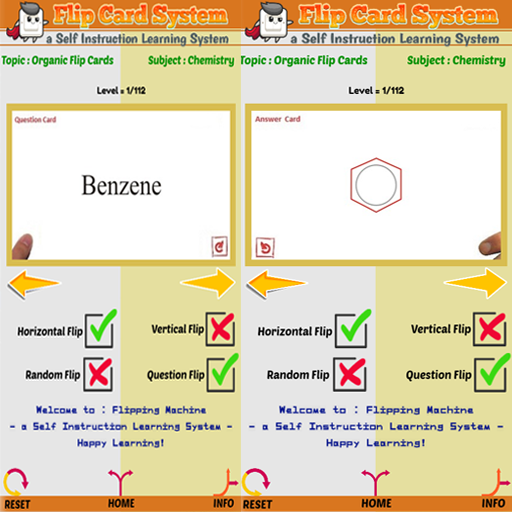 FCS Chemistry
 is a flip-card learning activity designed for quick chemistry revision. Students can review terms, ideas,…
View Details
Play
Free Activity
 Sub-Down-Ladder
 is a subtraction-focused mathematics game that turns number practice into a path-finding challenge. Lea…
View Details
Play
Free Activity
 Kids Fish Counting
 is an early numeracy game that combines counting, color recognition, and quick observation. Children…
View Details
Play
Free Activity
 Quadratic Equation Solver
 is an interactive mathematics tool for practising quadratic equations. It helps learners gene…
View Details
Play
Free Activity
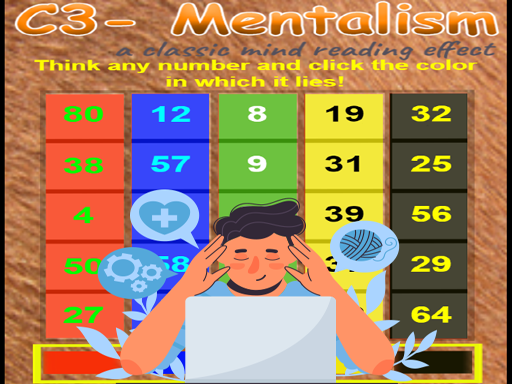 C3 Number Logic
 is a mathematical pattern activity based on a classic number-selection procedure. Students follow color…
View Details
Play
Free Activity
 Dussehra Values Challenge
 is a light cultural arcade activity inspired by the idea of choosing positive values over neg…
View Details
Play
★ Premium
 Number Pattern Name Game
 is a recreational mathematics activity based on digit operations and repeated patterns. It dem…
View Details
Access Info
Free Activity
 Spring Lab 1: Real-Time Physics Simulation
Spring Lab 1 is a real-time physics simulation for exploring springs, load, extension, and elastic behavior. Students c…
View Details
Play
Free Activity
 Hare and Tortoise: Number Sequencing
 is an early mathematics activity inspired by a familiar story theme. Children arra…
View Details
Play






💭 Comments