Learning objectives
- Identify crossing over as exchange between non-sister chromatids of homologous chromosomes.
- Place the event in prophase I of meiosis.
Biology · Interactive learning companion
Distinguish meiotic crossing over from mitotic sister-chromatid separation.
Landscape activity · use fullscreen on a phone for larger controls
Learning focus: Distinguish meiotic crossing over from mitotic sister-chromatid separation.
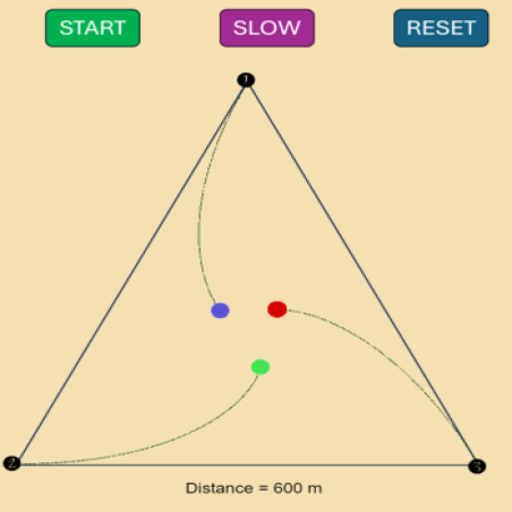 Convergence Chase Simulation
 explores a classic pursuit problem where moving points continuously chase one another. Stu…
View Details
Play
Free Activity
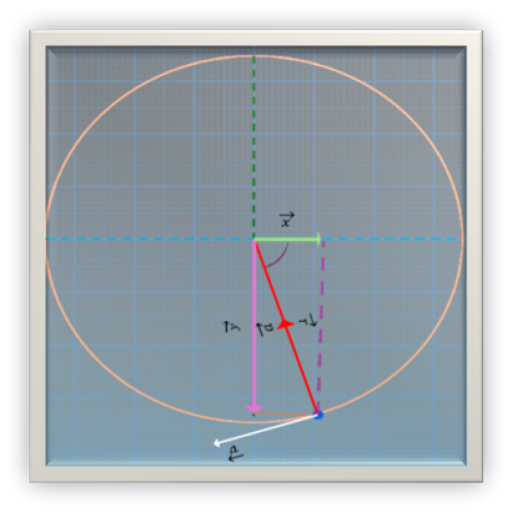 Uniform Circular Motion Simulation
 helps students visualize motion in a circle at constant speed. Learners observe radi…
View Details
Play
Free Activity
 Spring Lab 1: Real-Time Physics Simulation
Spring Lab 1 is a real-time physics simulation for exploring springs, load, extension, and elastic behavior. Students c…
View Details
Play
Free Activity
 Pendulum Lab 1: Real-Time Physics Simulation
Pendulum Lab 1 is a real-time simulation for studying pendulum motion. Students can observe oscillation, change variabl…
View Details
Play
Free Activity
 Monkey and Hunter Physics Simulation
Monkey and Hunter is a classic physics simulation for understanding projectile motion and gravity. Students observe how…
View Details
Play
Free Activity
 Prismatic Dispersion: Spectral Simulation
Prismatic Dispersion is an optics simulation for exploring how light separates into colors through a prism. It uses phy…
View Details
Play









💭 Comments