Learning objectives
- Distinguish refraction of a single wavelength from separation of polychromatic light.
- State why different wavelengths can leave a prism at different angles.
Physics · Interactive learning companion
Connect refraction and dispersion without suggesting that every material has the same colour order or numerical index.
Landscape activity · use fullscreen on a phone for larger controls
Learning focus: Connect refraction and dispersion without suggesting that every material has the same colour order or numerical index.
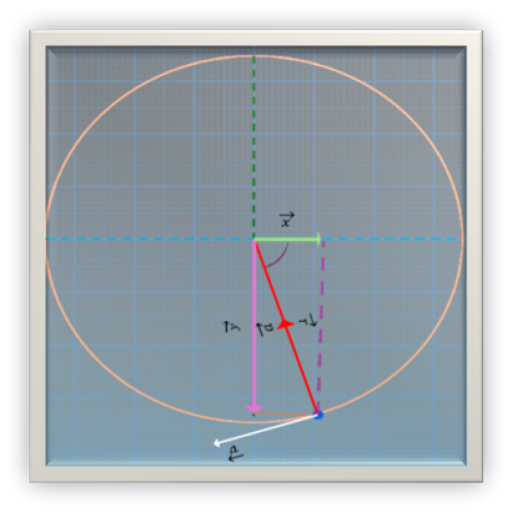 Uniform Circular Motion Simulation
 helps students visualize motion in a circle at constant speed. Learners observe radi…
View Details
Play
Free Activity
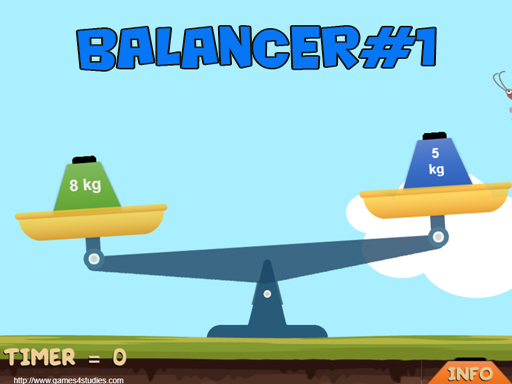 Physics Balancer 1: Mass Balance Simulation
Physics Balancer 1 is a visual mass-balance simulation that helps students understand equality of mass and basic balanc…
View Details
Play
Free Activity
 Spring Lab 1: Real-Time Physics Simulation
Spring Lab 1 is a real-time physics simulation for exploring springs, load, extension, and elastic behavior. Students c…
View Details
Play
Free Activity
 Pendulum Lab 1: Real-Time Physics Simulation
Pendulum Lab 1 is a real-time simulation for studying pendulum motion. Students can observe oscillation, change variabl…
View Details
Play
Free Activity
 Monkey and Hunter Physics Simulation
Monkey and Hunter is a classic physics simulation for understanding projectile motion and gravity. Students observe how…
View Details
Play
Free Activity
 All About Pi
 is a visual learning activity about the constant pi and its role in circles. Students explore the relation…
View Details
Play





💭 Comments