Physics · Relative motion · Grades 11–12

Rain Man Problem: Relative Velocity Simulation

Explore how a moving observer changes the measured velocity and apparent direction of falling rain.

Landscape activity · use Focus or Fullscreen for larger controls

Landscape activity · use fullscreen on a phone for larger controls

Interactive workspace: adjust one velocity at a time, predict the apparent rain direction, then compare with the simulation.

↗ New Window

📝 Description

Rain Man Problem is a relative velocity simulation that helps students visualize apparent rain direction and motion between observer and rain. Learners change values and observe how velocity components combine. It supports kinematics, vector reasoning, and classroom demonstration.

📋 Instructions

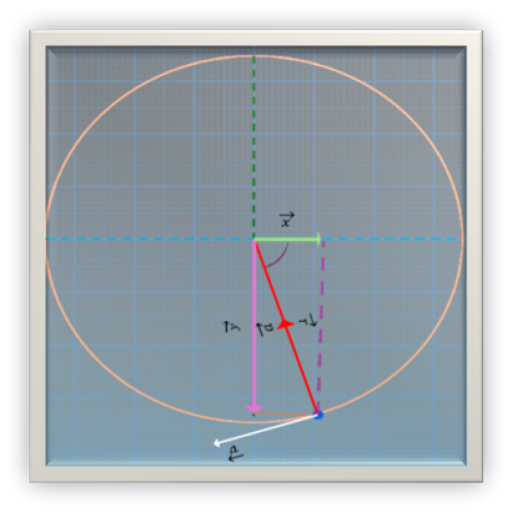
Adjust the motion values and observe the apparent direction of rain. Use vector components and diagrams to understand relative velocity.

🎓 Learning Guide: Rain Man Problem: Relative Velocity Simulation

Learning focus: Use vector subtraction to distinguish rain’s velocity relative to the ground from the apparent rain velocity measured by a moving observer.

Physics Grades 11–12 Interactive learning companion

Learning objectives

  • Define relative velocity and calculate one object’s velocity as measured from another moving reference frame.
  • Distinguish the rain’s actual direction in the ground frame from its apparent direction in the observer’s frame.
  • Use perpendicular velocity components to calculate relative speed and apparent angle.

Concepts and principles

v⃗rel = v⃗rain − v⃗observer
v⃗rel
rain velocity measured relative to the moving observer
v⃗rain
rain velocity relative to the ground
v⃗observer
observer velocity relative to the ground
  • Relative velocity is found by vector subtraction. The rain velocity seen by the observer is vᵣₐᵢₙ/ₒᵦₛ = vᵣₐᵢₙ/ground − vₒᵦₛ/ground.
  • Actual rain direction describes the rain’s motion relative to the ground. Apparent rain direction describes its motion relative to the moving observer; these directions need not be the same.
  • If the rain falls vertically while the observer moves horizontally, the observer measures a horizontal relative component opposite to their own motion as well as the downward rain component.

Examples and worked solutions

Rain falls at 8 m/s vertically downward relative to the ground while an observer moves horizontally to the right at 6 m/s. Find the rain’s velocity relative to the observer.
Worked solution: Take right as +x and up as +y. Then vᵣₐᵢₙ/ground = (0, −8) m/s and vₒᵦₛ/ground = (6, 0) m/s. Therefore vᵣₐᵢₙ/ₒᵦₛ = (0, −8) − (6, 0) = (−6, −8) m/s. Its speed is √(6² + 8²) = 10 m/s. The apparent angle from the downward vertical is tan⁻¹(6/8) ≈ 36.9°, leaning opposite to the observer’s motion.
v⃗rel = (0, −8) − (6, 0)
v⃗rel = (−6, −8) m/s
|v⃗rel| = √(62 + 82)
= 10 m/s
θ = tan−1(6/8) ≈ 36.9°

Try this investigation

  1. Set or identify a case in which the rain falls vertically and the observer is stationary. Record the displayed rain direction.
  2. Keep the rain velocity unchanged and increase only the observer’s horizontal speed. Before running, predict which way the apparent rain vector will tilt.
  3. Compare at least two observer speeds. For each, sketch vᵣₐᵢₙ/ground, vₒᵦₛ/ground and their difference vᵣₐᵢₙ/ₒᵦₛ.
  4. Return the observer speed to zero and confirm that the apparent direction again matches the ground-frame rain direction.

Expected observations and explanations

  • For a stationary observer, rain that is vertical in the ground frame also appears vertical.
  • As horizontal observer speed increases while ground-frame rain velocity stays fixed, the apparent rain tilts farther from the vertical.
  • The horizontal component of the relative rain velocity points opposite to the observer’s motion because the observer velocity is subtracted.
  • The rain itself has not acquired that horizontal ground-frame component; the changed direction is a reference-frame effect.

Assessment questions and answers

Rain falls vertically downward at 8 m/s and an observer moves horizontally at 6 m/s. What relative speed and apparent angle from the vertical does the observer measure?
Answer: The relative components have magnitudes 6 m/s horizontally and 8 m/s downward. The speed is √(6² + 8²) = 10 m/s, and the angle from vertical is tan⁻¹(6/8) ≈ 36.9°, tilted opposite to the observer’s motion.
If the observer stops while the rain’s ground-frame velocity stays vertically downward, what happens to the apparent direction? Explain using vector subtraction.
Answer: It becomes vertical. With vₒᵦₛ/ground = 0, the relation vᵣₐᵢₙ/ₒᵦₛ = vᵣₐᵢₙ/ground − 0 leaves the relative rain velocity equal to the actual ground-frame rain velocity.

💭 Comments

🎮 More Physics Activities