Learning objectives
- Explain the photon-energy relation E=hν.
- Relate electron emission to work function and maximum kinetic energy.
Physics · Interactive learning companion
Show how threshold frequency and intensity have different roles in the photoelectric effect.
Landscape activity · use fullscreen on a phone for larger controls
Learning focus: Show how threshold frequency and intensity have different roles in the photoelectric effect.
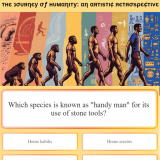
 Human Evolution: Visual Learning Journey
 introduces the broad progression of human development through visual stages an…
View Details
Play
Free Activity
 Understanding Different Types of Forces
 is an interactive physics activity that introduces common forces and real-life …
View Details
Play
Free Activity
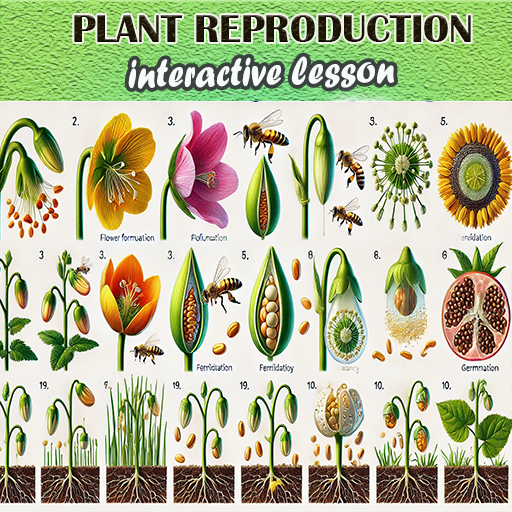 Plant Reproduction with Subtitles
 is a biology activity that explains how plants reproduce through visual narration and…
View Details
Play
Free Activity
 Kepler's Laws of Planetary Motion
 is a visual simulation for studying orbital motion. Students explore elliptical orbit…
View Details
Play
Free Activity
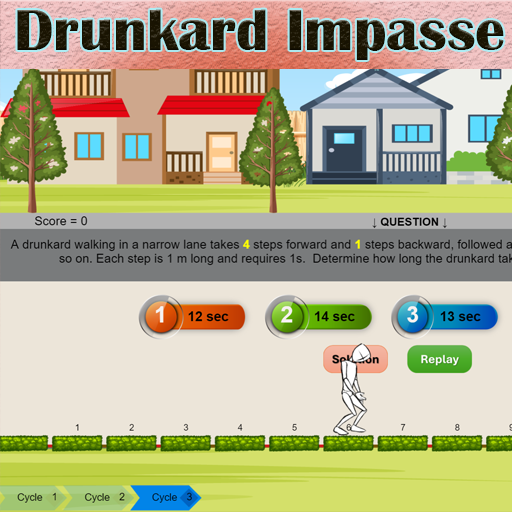 Forward-Backward Walk Logic Puzzle
 is a motion and reasoning activity based on repeated forward and backward steps. Stu…
View Details
Play
Free Activity
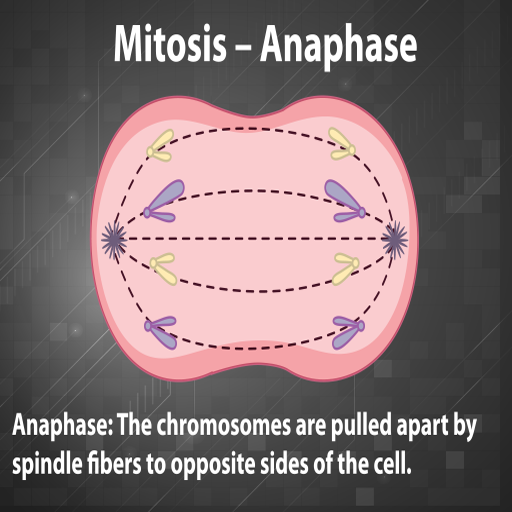 Process of Mitosis Simulation
 is a biology learning activity that visually explains the stages of cell division. Studen…
View Details
Play








💭 Comments