Learning objectives
- Distinguish the upper bead’s value from the lower beads’ values.
- Represent simple one-column digits under the standard soroban convention.
Mathematics · Interactive learning companion
Read a Japanese soroban digit through upper- and lower-bead values, not only total bead count.
Landscape activity · use fullscreen on a phone for larger controls
Learning focus: Read a Japanese soroban digit through upper- and lower-bead values, not only total bead count.
 Kids Counting Machine
 is a colourful counting activity for young learners. Children observe objects, count them, and an…
View Details
Play
Free Activity
 pH Scale Matrix Quiz
 helps learners practise identifying acids, bases, indicators, and pH ranges. It combines chemistry…
View Details
Play
★ Premium
 Are You Eco-Friendly?
 is an environmental awareness quiz that encourages learners to reflect on everyday habits and sus…
View Details
Access Info
Free Activity
 Spring Lab 1: Real-Time Physics Simulation
Spring Lab 1 is a real-time physics simulation for exploring springs, load, extension, and elastic behavior. Students c…
View Details
Play
Free Activity
 Catch The Snake
 is a step-by-step puzzle game where players remove blocks and plan a safe path to reach the sleeping sn…
View Details
Play
Free Activity
 Order and Sort: English Alphabets
Order and Sort is an English alphabet sequencing activity for early learners. Students arrange letters in the correct o…
View Details
Play
Free Activity
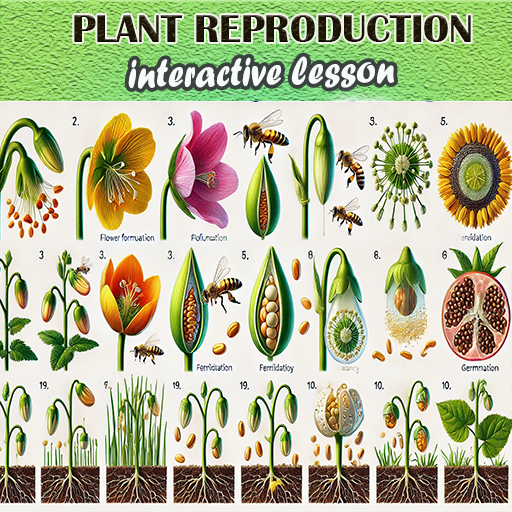 Plant Reproduction with Subtitles
 is a biology activity that explains how plants reproduce through visual narration and…
View Details
Play
Free Activity
 Number Pattern: Guess My Age
 is a binary-selection activity that demonstrates how yes/no choices can identify a number.…
View Details
Play
Free Activity
 Chem-Clock: Chemistry Digital Clock
Chem-Clock is a chemistry-themed digital clock designed for display, classroom ambience, and science corners. It can be…
View Details
Play
Free Activity
 Hold The Ball
 is a coordination and focus game where players try to keep the ball from falling. It supports timing, att…
View Details
Play
Free Activity
 Card Pattern Demonstration
 is a two-click card activity based on a mathematical pattern. It encourages learners to thin…
View Details
Play
Free Activity
 Cardoku Card Matrix Puzzle
Cardoku is a card-matrix puzzle inspired by Sudoku-style reasoning. Learners arrange face cards so that rows, columns, …
View Details
Play







💭 Comments