Learning objectives
- Distinguish a caught outcome from a missed outcome.
- Keep a tally of results over several attempts.
- Calculate a simple success fraction from observed totals.
Reasoning — Observation and Data · Casual coordination and outcome counting game
Practise observing, counting and comparing caught and missed outcomes in a simple skill game.
Portrait activity · keep the device upright for the intended layout
Learning focus: Practise observing, counting and comparing caught and missed outcomes in a simple skill game.
 Marbles Probability
 is a visual probability game based on marbles and outcome prediction. It helps learners practice li…
View Details
Play
Free Activity
 Math-N-Chance
 combines arithmetic practice with a fast visual challenge. Learners solve calculations, respond quickly, …
View Details
Play
Free Activity
 Monsters Abacus Place Values (MAPV)
Monsters Abacus Place Values is a playful abacus quiz for comparing numbers and place values. Students choose the monst…
View Details
Play
Free Activity
 River Crossing: Relative Motion Simulation
River Crossing is a relative motion simulation that helps students understand boat velocity, river flow, resultant moti…
View Details
Play
Free Activity
 Virtual Soroban: Japanese Abacus
Virtual Soroban is an interactive Japanese abacus activity for exploring bead values and number representation. Student…
View Details
Play
Free Activity
 Dynamic Mathematics: Linear Equations
 is a practice activity for hidden-number and equation-based thinking. It helps le…
View Details
Play
Free Activity
 Animalia-Continents
 is a biology and geography learning game that connects animals with their habitats and continents. …
View Details
Play
Free Activity
 Angle of Repose Simulation
 helps students study the angle at which an object begins to slide on a rough inclined plane.…
View Details
Play
Free Activity
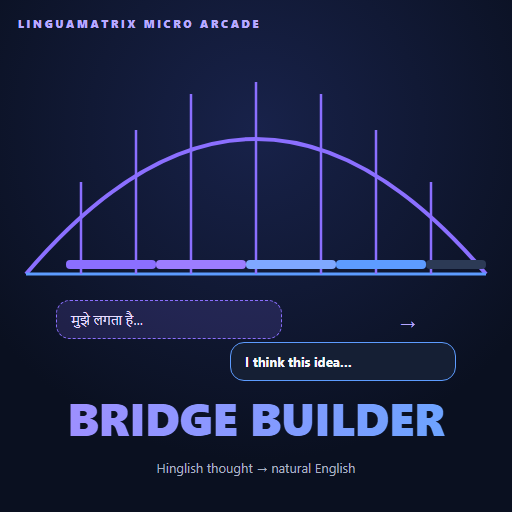 LinguaMatrix Micro Arcade
 groups two short playable teaser games into one package. Learners can choose Situation Switch…
View Details
Play
Free Activity
 Vernier Calliper Simulator
 is a measurement tool for learning how to read a vernier scale. Students practice observing …
View Details
Play
Free Activity
 Word Sort: Professions and Jobs
 is an English vocabulary activity that helps children recognize occupation names. Learn…
View Details
Play
Free Activity
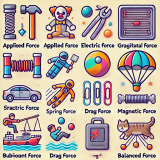
 Free Body Diagram Practice
 helps students identify and represent forces acting on an object. The activity supports forc…
View Details
Play





💭 Comments