Learning objectives
- Recognise animals by their displayed names and images
- Compare perceived sound qualities without assuming every sample represents all individuals of a species
Science — Animals and Sounds · Animal picture-and-sound reference
Use named animal images and associated audio as a listening and identification activity while keeping claims about species behaviour modest.
Portrait activity · keep the device upright for the intended layout
Learning focus: Use named animal images and associated audio as a listening and identification activity while keeping claims about species behaviour modest.
 Sub-Down-Ladder
 is a subtraction-focused mathematics game that turns number practice into a path-finding challenge. Lea…
View Details
Play
★ Premium
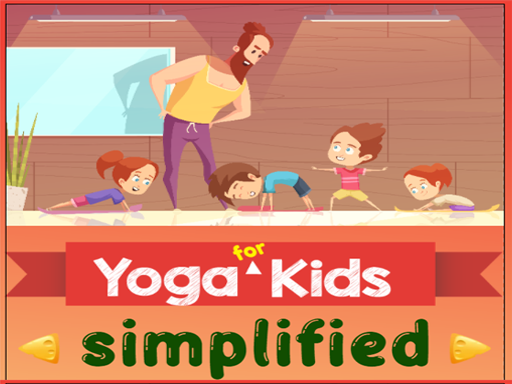 Yoga Cards for Kids
 is a gentle movement-card activity that introduces simple poses with child-friendly prompts. It can…
View Details
Access Info
Free Activity
 Alien Maths
 is an arithmetic practice game where learners solve addition, subtraction, and multiplication questions und…
View Details
Play
Free Activity
 Dinosaur Flashcards
 is an educational visual activity featuring well-known dinosaurs. Students explore names, illustrat…
View Details
Play
Free Activity
 Yes/No Communication Practice
 is a visual prompt activity for learners who are practising simple yes and no responses. …
View Details
Play
Free Activity
 Order and Sort: English Alphabets
Order and Sort is an English alphabet sequencing activity for early learners. Students arrange letters in the correct o…
View Details
Play
Free Activity
 Matchsticks Puzzle
 is a logic and mathematics challenge where players add, remove, or move sticks to complete equations…
View Details
Play
Free Activity
 Touch Letters
 is a Punjabi alphabet practice game for early learners. Students identify the displayed letter and tap th…
View Details
Play
Free Activity
 True or False
 is a general knowledge quiz game where students decide whether each statement is correct. It supports rea…
View Details
Play
Free Activity
 Wall Pin Board
 is a simple timing and coordination game where players aim to score points by interacting with moving bo…
View Details
Play
Free Activity
 Prismatic Dispersion: Spectral Simulation
Prismatic Dispersion is an optics simulation for exploring how light separates into colors through a prism. It uses phy…
View Details
Play
Free Activity
 Catch The Snake
 is a step-by-step puzzle game where players remove blocks and plan a safe path to reach the sleeping sn…
View Details
Play





💭 Comments