Learning objectives
- Recognise selected Hindi consonant letterforms.
- Compare aspirated and unaspirated pairs by listening to the audio.
- Use the game’s drag/drop matching rather than relying solely on Latin-letter labels.
Hindi — Letter Sounds · Hindi consonant and articulation matching
Associate Devanagari consonant letters with their spoken forms, treating English approximations as rough memory aids only.
Portrait activity · keep the device upright for the intended layout
Learning focus: Associate Devanagari consonant letters with their spoken forms, treating English approximations as rough memory aids only.
 Rhyme Times
 helps young learners recognize rhyming words through picture-based practice. It supports phonics, listening…
View Details
Play
Free Activity
 Dynamic Mathematics: Linear Equations
 is a practice activity for hidden-number and equation-based thinking. It helps le…
View Details
Play
Free Activity
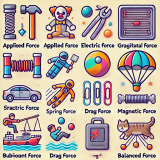
 Understanding Different Types of Forces
 is an interactive physics activity that introduces common forces and real-life …
View Details
Play
Free Activity
 Magic-E Rule: Silent E Spelling
Magic-E Rule introduces the silent-e spelling pattern in English. Students explore how a final silent e can change the …
View Details
Play
Free Activity
 Know Our Solar System
 is a quiz-based activity that helps students review planets, space objects, and basic facts about…
View Details
Play
Free Activity
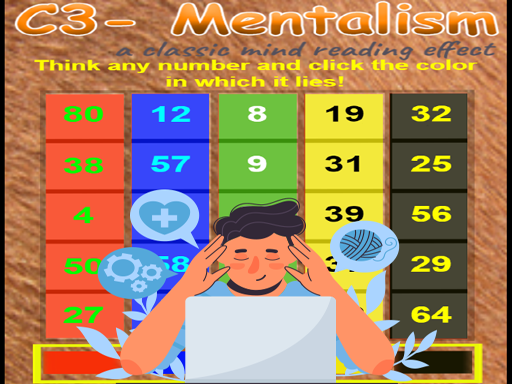 C3 Number Logic
 is a mathematical pattern activity based on a classic number-selection procedure. Students follow color…
View Details
Play
Free Activity
 Hindi Alphabet: Vowels and Consonants
 is an interactive language activity for learning Hindi letters in a clear visual …
View Details
Play
Free Activity
 Virtual Soroban: Japanese Abacus
Virtual Soroban is an interactive Japanese abacus activity for exploring bead values and number representation. Student…
View Details
Play
Free Activity
 Punjabi Alphabet: Vowels and Consonants
 is a beginner-friendly activity for recognizing Punjabi letters and letter grou…
View Details
Play
Free Activity
 X-MATHS
 is an addition puzzle game where learners place answers to complete diagonal sums. It supports arithmetic fluen…
View Details
Play
Free Activity
 Heads N Tails
 is a probability game that helps learners explore coin toss outcomes through visual play. It supports cha…
View Details
Play
Free Activity
 Dinosaur Flashcards
 is an educational visual activity featuring well-known dinosaurs. Students explore names, illustrat…
View Details
Play






💭 Comments